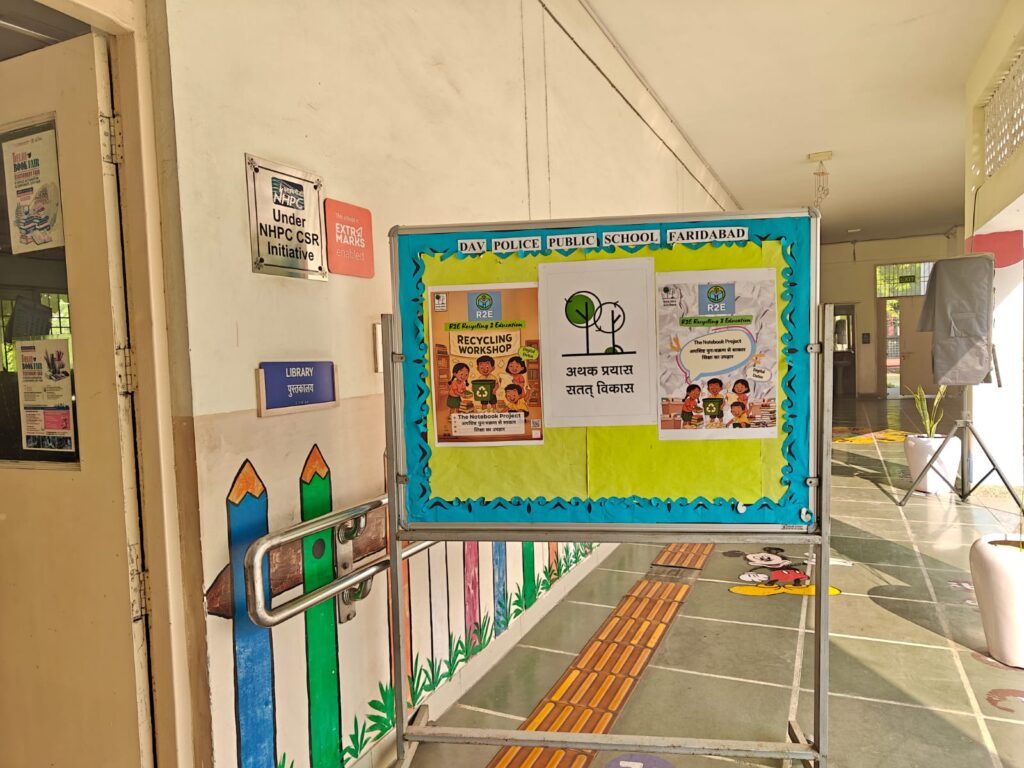
On 17 November 2025, the Eco Club of DAV Police Public School, Faridabad, in collaboration with अथक प्रयास सतत विकास, organized an engaging Group Discussion and Interaction Session for students of Classes 8 to 12. The session focused on the theme “Sustainability through The Notebook Project”, encouraging students to think, discuss, and act towards a more sustainable future.
About the Session
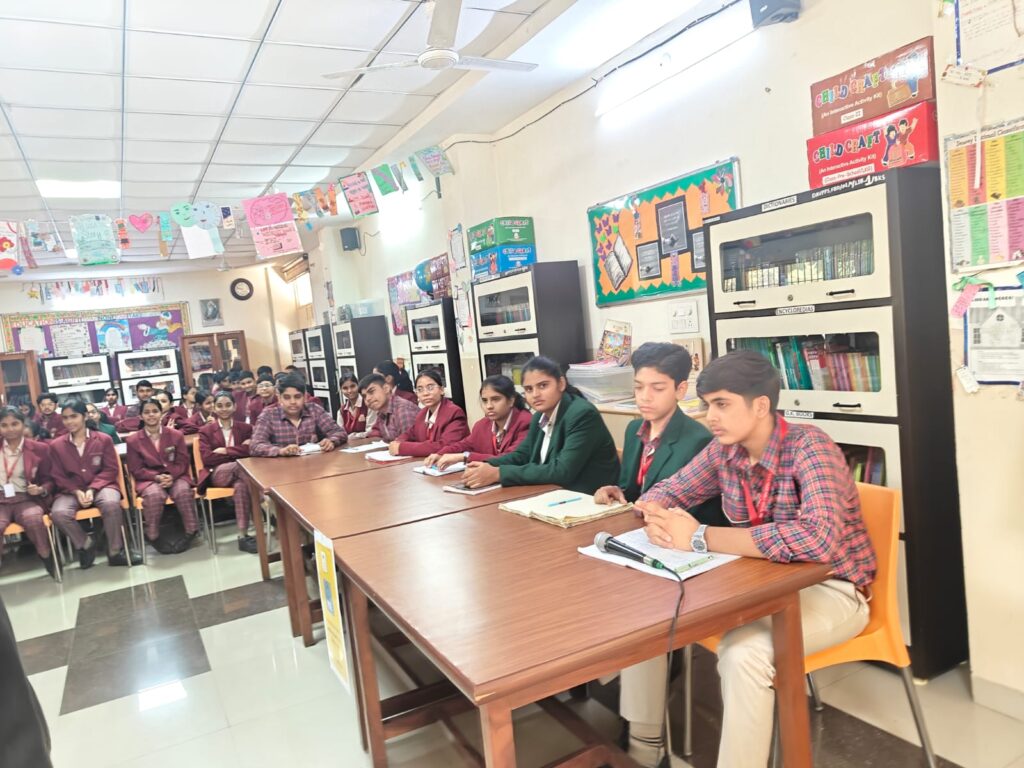
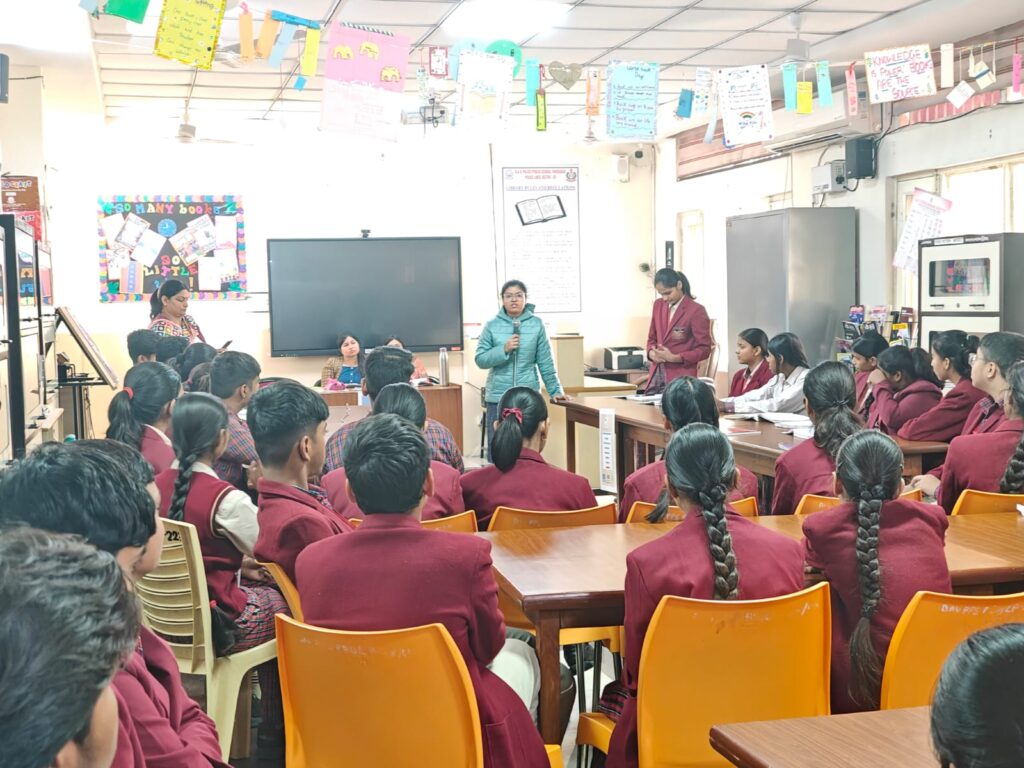
The group discussion aimed to create awareness about environmental responsibility, sustainable education, and the role of students in driving positive change. Through open discussions and interactive dialogue, students shared ideas, real-life examples, and practical solutions related to sustainability and recycling.
Key Discussion Themes
Students actively participated in discussions around the following topics:
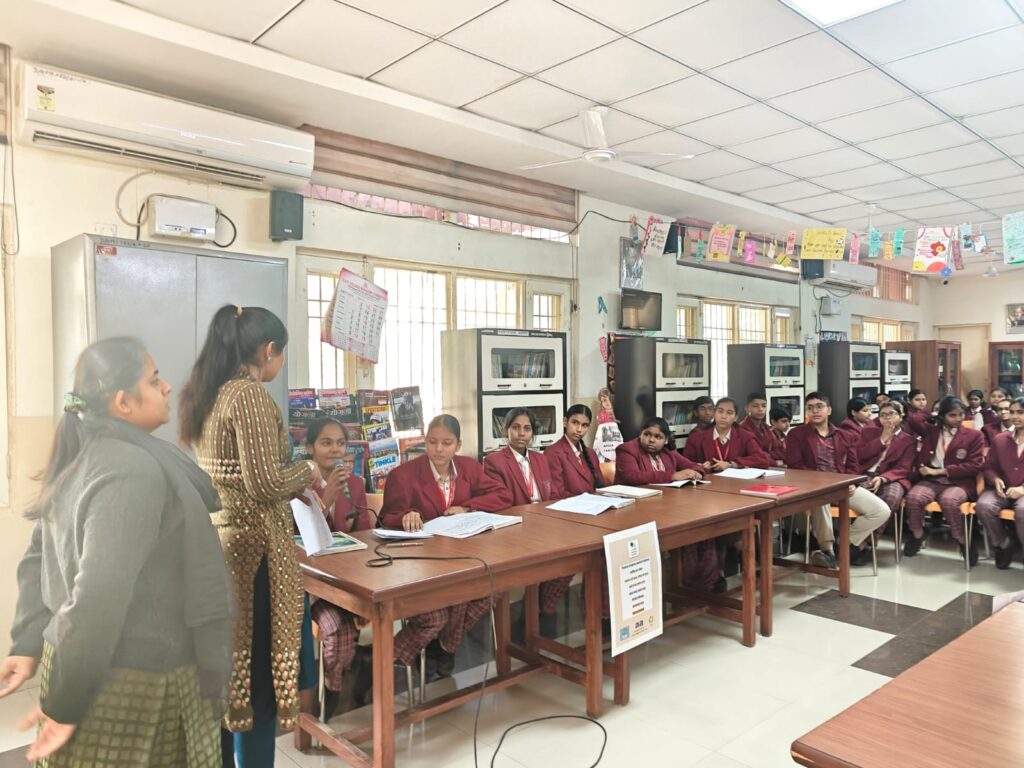
- Recycling 2 Education – Transforming Waste into Opportunity, highlighting the importance of paper recycling in schools and communities.
- Ways students can encourage their families to recycle and reduce waste at home.
- Understanding the concept of Circular Economy in simple terms and how The Notebook Project supports it.
- The role of students as “Green Ambassadors”, including taking a R2E Recycling 2 Education Pledge for their school and community.
- Simple sustainability actions students can adopt within the school campus.
- Digital Detox and Responsible Consumption, and how The Notebook Project promotes reduced screen time.
- How to organize and manage school or community scrap collection drives effectively.
- The importance of awareness and volunteer participation in sustainability initiatives.
- Understanding sustainable education and the contribution of The Notebook Project.
- Real-life impact stories, showing how small actions can lead to big change.
- The importance of writing practice among students and effective ways to improve it through regular use of notebooks.
Student Engagement & Outcome
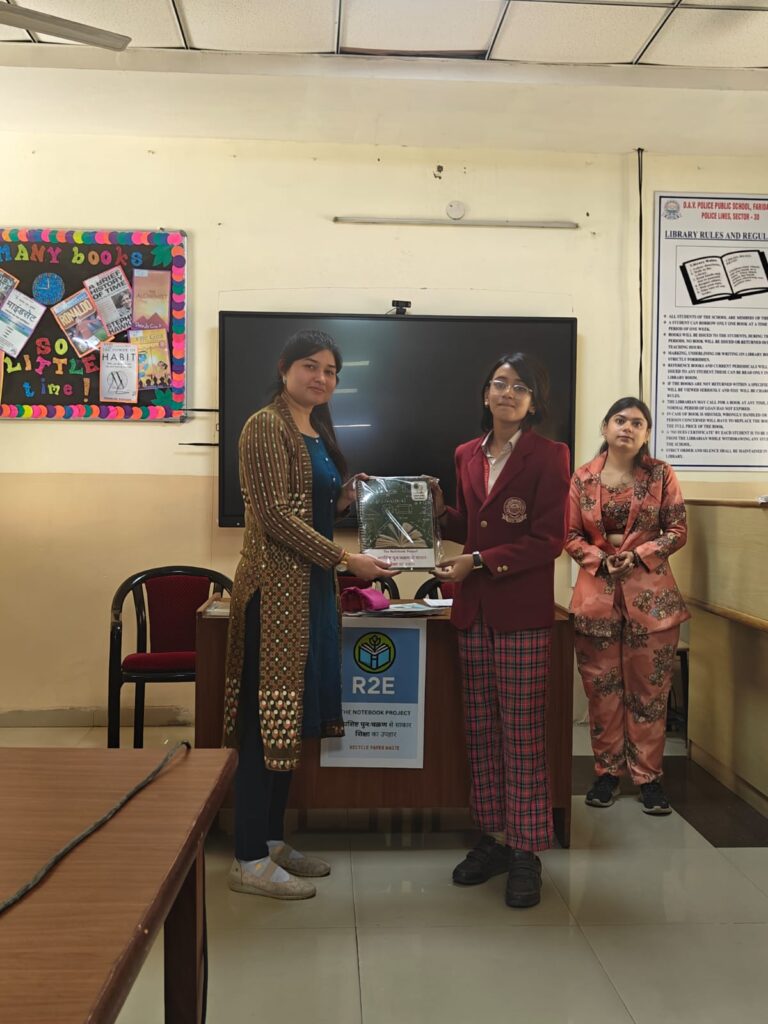
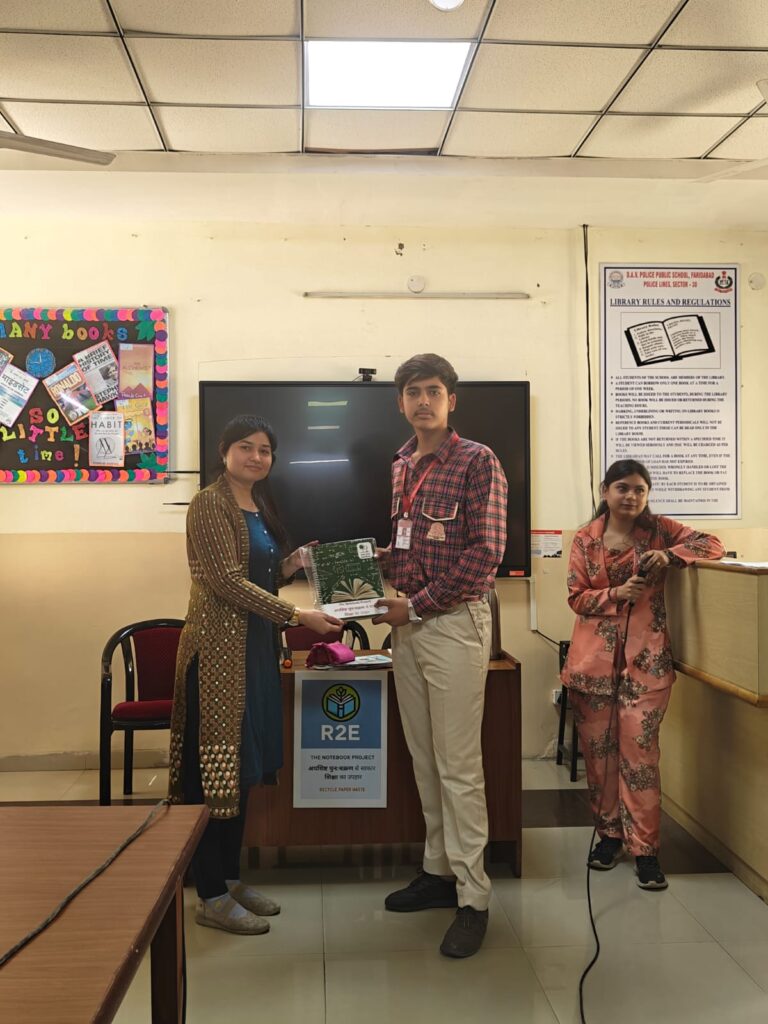
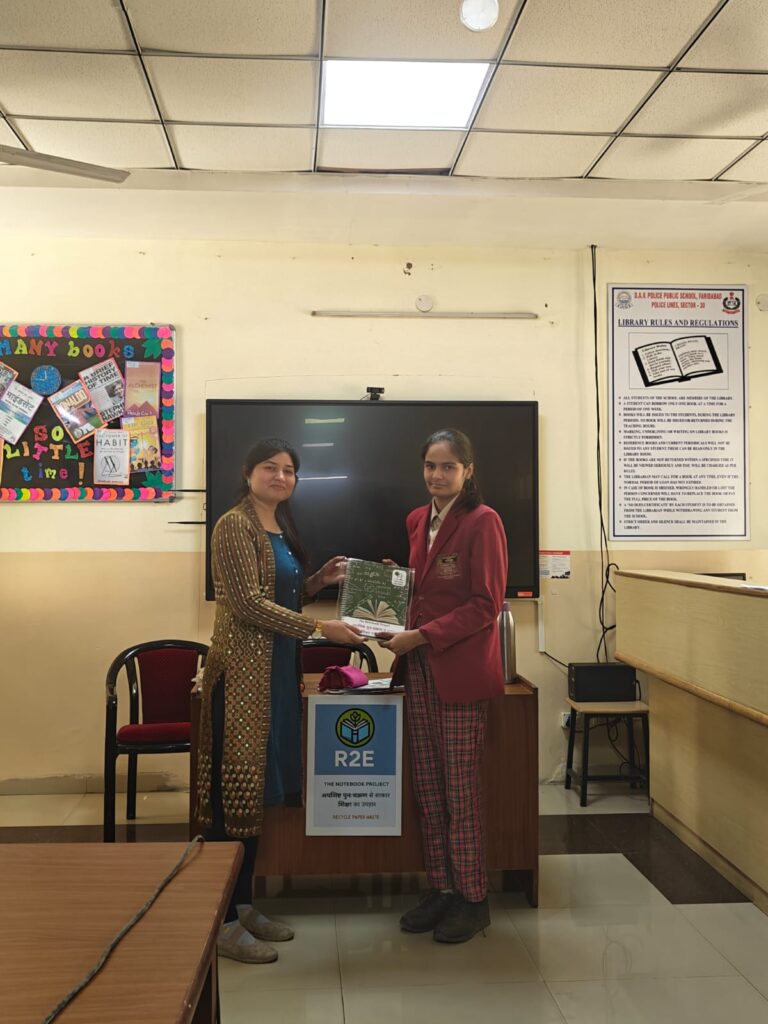
The session saw enthusiastic participation from students, who expressed strong interest in sustainability practices and environmental leadership. As a token of appreciation and to encourage more writing practice, students received spiral registers for their active participation. The discussion helped students connect classroom learning with real-world environmental action.
Acknowledgements
We extend our sincere thanks to Ms. Hema Arora, Principal Ma’am, for granting permission to conduct this workshop. We also express heartfelt gratitude to Ms. Deepika Arora and Ms. Kusum for their dedicated efforts, seamless coordination, and constant support in making the program successful.
Conclusion
The Group Discussion on Sustainability through The Notebook Project successfully inspired students to adopt eco-friendly habits, practice responsible consumption, and become active contributors to a sustainable future. The initiative reinforced the idea that small, consistent actions by students can create a large positive impact on society and the environment.